Blog

  • NBN frequently asked questions

    NBN frequently asked questions by Ros Page for Choice


    Last updated: 27 April 2017

    The national broadband network (NBN) was touted as the solution to Australia’s broadband woes. The reality, however, is that while the NBN remains popular across the board, it’s found itself a hot-button issue in the political sphere, mired in claims and counter-claims about the progress of the NBN rollout, the cost, the merits of the different technologies and the very definition of a national network.

    The technical jargon around the NBN can be baffling and overwhelming to many people. We believe you shouldn’t need a degree in engineering to read an article about the NBN.

    So, to help you decode some of the numbers and letters thrown around when trying to understand the NBN, we’ve put together this round-up of some of the key questions about the network and the various technologies used in the rollout. We hope to bring some much-needed clarity to the topic of the NBN.

    What is the NBN?

    The national broadband network, or NBN, is a broadband network being built around the country to give Australians access to faster internet. It’s a multi-technology mix (MTM) network, which means a variety of technologies are being used to connect it to premises, including fibre optic cable, copper wire and pay TV networks, as well as fixed wireless and satellite in rural and regional areas.

    The latest cost estimate is $46–$56 billion, and the NBN is intended to bring the so-called ‘information superhighway’ to your door. The idea is that it’ll give you improved internet access by the time it’s finished, which is some years off yet, although not all connections are created equal because of the different technologies used in the network.

    How do I choose an NBN plan?

    When your area is in the planning stage, you might start to get letters from service providers about switching to the NBN. If you’re not sure, check your address and sign up for alerts on the revamped rollout map on the NBN website. It now tells you what connection type is expected to be rolled out in your area and if it’s in the planning, building or active service stage.

    Check there are no penalties for breaking with your existing ISP when you move to a new NBN plan. If your home is new to the NBN, you may have to pay the $300 first connection fee.

    If you’re not sure how much data you will need, start with one of the smaller data allowances and upgrade if it’s insufficient. If you’re not sure about speed, start with a modest broadband speed of 25Mbps and increase if you find it’s not sufficient. The Australian Competition and Consumer Commission (ACCC) is looking at broadband speed monitoring to help consumers getreal-worldd speed information that can be compared across different providers.

    How fast will the NBN be?

    Most of us couldn’t get through an hour, let alone a day, without the internet. It brings shopping, friends, work and entertainment right to our computers. Yet it’s also a pain point for many who deal with the daily frustration of slow speeds, drop-outs and patchy connections – and we’re not just talking about streaming Netflix after dinner.

    The NBN will be faster than you get now, but speeds will vary depending on your location and the technology used. The promise is that the NBN will deliver a wholesale speed of at least 50Mbps to 90% of fixed line (not wireless) premises by 2020 – fast enough so that you can download digital movies in minutes, not hours.

    NBN or Nbn™?

    The NBN is the network being constructed by Nbn™.

    Confused? You’re not alone. The network is known as the NBN. The government organisation responsible for building the network is known as Nbn™ (renamed from NbnCo), and it acts as a wholesaler to your retail internet service provider. 

    Where is the NBN up to?>

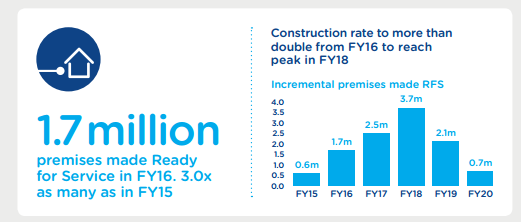
    As at February 2017, there are more than 1.82 million active retail connections on the network with more than 4.1 million marked as ready for service. The NBN has been under construction since 2010 after the then-Labor government announced it would set up a government-owned enterprise to construct Australia’s new national network. 

    The government recently announced it is providing a loan of $19.5bn that is needed to complete the rollout, sparing Nbn™ the need to find private funding for the additional debt.

    The NBN is expected to be sold in 2021 when the rollout is completed and the remaining government debt will be re-financed through commercial partners.

    Isn’t the NBN good enough for Netflix?

    As a national network, the NBN is intended to be the backbone of our country-wide communication and information network. In our own life we might see it simply as our line to Netflix, yet it’s so much more when you consider the range of applications that run on the internet. Yes, it’s the link for digital entertainment, but it’s also the backbone for wireless and conduit for e-health, e-government, smart technology, telework and so much more. The demand for network capacity (bandwidth) and speed is growing exponentially and a national network needs to be expandable to meet this ever-growing demand. 

    But going back to the Netflix example, one 4K or ultra HD stream of a movie or TV show, which is available right now, will need at least a 25Mbps connection uninterrupted. For 4K Netflix streaming to work without dropouts the home broadband connection should be about 30Mbps, and the ISP would need to ensure there is enough capacity available to provide a constant, dedicated and reliable 25Mbps connection available from the Netflix server to the home. 

    Now imagine you have two 4K streams in the one house (say, one on the TV and one on a laptop in another room) – you’d want a connection of at least 50Mbps to get a smooth viewing experience. If Internet browsing or other Internet applications are needed whilst the 4K streaming is occurring, then more bandwidth is required or the 4K stream performance will suffer. 

    This is why engineers and telecommunications experts continue to argue that a fibre-based network provides for this kind of expansion in capacity to meet the many demands of a national network, whether it’s from the home or business. 

    Do people not want high speeds above 25Mbps?

    It’s often said when arguing for the current MTM plan or, by reverse, criticising the original all-fibre plan, that most people haven’t chosen the higher speeds, which proves that an NBN with speeds above 25Mbps per second is overkill. However, it’s not as simple as this, because the speed tiers relate to the wholesale pricing structure built into the NBN. Nbn™
    originally offered speed tiers including low-speed plans, so they were comparable to ADSL at the time. It was intended to encourage take-up of NBN at a cost that was comparable to ADSL and avoid a two-class broadband situation where ADSL people languished at economy speeds while NBN customers enjoyed premium internet. 

    However, in hindsight it’s had the effect of pricing the higher speeds at a premium and discouraging people from opting for the higher speeds and thereby artificially keeping demand at the lower levels. The cost of telecommunications in Australia is among the highest in the OECD, and the high cost is a limiting factor when customers select broadband plans. If broadband was cheaper more people would select broadband plans higher than 25Mbps.

    Why can’t wireless go the last distance?

    It’s often said that wireless should go the last distance to connect homes to the NBN to save the hassle and expense of trying to run fibre right to the home or re-run new copper. However, many experts contend that wireless can’t cut it when it comes to high-speed broadband for several reasons. The number of customer connections, distance, line of sight and atmospheric conditions diminish wireless performance. 

    Wireless provides a great solution for mobility connections to the Internet and where the density of premises is not as high as in the suburbs fixed wireless broadband connections are appropriate – but when it comes to connecting premises in high density areas, the amount of bandwidth needed today is far more than current wireless systems can support. 

    Do I have to connect to the NBN?

    Yes you do have to connect, but you’ll have 18 months after the NBN service becomes active in your area to shift to the new network. After this time, existing phone and internet services will be turned off. Nbn™ and your ISP will send you information about moving to the new network.

    Can I just have the phone and no internet connection?

    Yes, you can just have a phone service when you move to the NBN. You won’t need to take an internet plan if you don’t want it. The new NBN equipment boxes will still be installed in your house by Nbn™ because the existing copper phone services will be disconnected. Your new phone service will connect via the NBN.

    What if I can’t afford the NBN?

    Telstra is required by the government to offer a discounted phone service over the NBN for low-income households. Telstra and Optus offer discounted home internet and phones services to eligible customers who receive Australian Government income support. Pensioners on a Centrelink benefit may qualify for the Telephone Allowance to help them pay their phone bills.

    What is the $300 new development fee?

    The ‘new developments’ charge came into effect in April this year and applies to all first-time connections for newly built premises that connect to the NBN. It applies to all NBN connections types including fibre to the node (FTTN), fibre to the premises (FTTP), satellite and fixed wireless. It’s only payable once and is levied on the ISP by Nbn™ and then usually passed onto the customer. 

    Do I need a new phone and router?

    The answer depends on what type of connection comes to your place. You should be able to keep your existing phone number when moving to the NBN, but do check with your ISP.

    • Existing fixed wireless or satellite connections: you shouldn’t need to upgrade your equipment for the NBN. If you’re getting a new fixed wireless or satellite connection, check with the ISP about what equipment you may need.
    • Fibre to the premises (FTTP), where you’re getting fibre direct to your house: you’ll need a new router, but you won’t need a new phone. Your existing phone can plug into the NBN connection box in your house. 
    • Fibre to the node (FTTN): you’ll need a new modem, but not a new phone because you should be able to plug your existing phone into this modem. If you don’t want the internet and just require a phone service, you’ll need a new phone that uses the internet over the phone line (known as VoIP) for making calls, which is plugged directly into the phone socket. 

    Do I need to do anything about internal cables?

    You may need or want to upgrade internal cabling to connect entertainment, communications and medical or assisted-living devices.

    What if I have a medical alarm?

    Medical alarms and emergency call services connected to the copper phone line may not continue to work after the 18-month NBN transfer window has closed. Firstly, you should register your alarm at nbn.com.au/medicalregister or by calling 1800 227 300 well before the cut-off date. Then call your emergency or alarm service provider and check if it will work on the NBN; and finally, tell your ISP if you need priority assistance service levels.

    When will I get the NBN?

    This is the question that plagues many of us when we’re watching the spinning ball on the screen while attempting to download or stream our favourite shows. The NBN is scheduled to be completed by 2021, but that doesn’t tell you when exactly your place is earmarked for connection.

    You can enter your address online to check on the NBN rollout but the most it will tell you is what stage the rollout is at for your address: not available, build preparation, build commenced, or available.

    How can I trust someone is really from NbnTM?

    Unfortunately scammers will sometimes use major government programs like the NBN to trick people into handing over their money or personal details. They pretend to be from Nbn™, a government agency or a telecommunications provider to sound legitimate.

    Nbn™ will never ask for your banking or financial details. If someone rings you or comes to your door saying they’re from Nbn™, we don’t recommend sharing any of your personal details or paying for any equipment. Ring your own phone company or find one on the NBN website (see above) to get information about the NBN plans, so you know you’re dealing with a legitimate service provider. Contact your financial institution immediately if you think you’ve given your details to a scammer.

    What do all the acronyms mean?

    The NBN has become something of an alphabet soup – there are acronyms and abbreviations aplenty. Most of us haven’t studied networking 101 and so it can be hard to get our heads around all the jargon. We’ll hopefully explain it simply so you know what connection you’ll eventually get when the NBN comes to your place. Here are the different technologies used in the multi-technology mix network.

    Fibre to the node (FTTN)

    Unless you live in a unit, new development or rural area, you’re likely to get fibre to the node (FTTN) NBN. This technology will form the largest part of the NBN. Fibre optic cable runs to a local node (connection cabinet) in a street in your area, and then connects to the existing copper phone lines to your place. The cabinet handles connections for up to 1000 premises.

    The node system uses VDSL (vectored or enhanced DSL) technology that improves ADSL connections on existing copper phone lines. VDSL is able to cancel the interference, or crosstalk, between the copper lines from the telephone exchange in order to speed up the transfer rate of internet traffic.

    You’ll need a new VDSL modem, but no new hardware needs to be installed in the home. Your existing home phone should plug into the VDSL modem, which is connected to the existing phone port inside your house. If you don’t want the internet but you do want a phone service, you’ll need a new VoIP phone that plugs into the existing phone socket because the calls are now carried via the internet over the copper line.

    Fibre to the curb (FTTC)

    Fibre to the curb (FTTC), also known as FTTdp, has recently been included in the technology mix of the NBN where fibre is run right to the telecom pit at the front of the premises. Nbn recently announced that a further 300, 000 premises will get the newer FTTC instead of FTTN. It’s already earmarked 700,000 premises in the Optus HFC network to get FTTC bringing the total to 1 million as of April 2017. FTTC does away with the need to dig into driveways, lawns and yards but uses less copper than FTTN and does not require a powered cabinet. The FTTC services using VDSL technology for the copper section are expected to launch in 2018.

    Fibre to the distribution point (FTTdp)

    Fibre to the distribution point (FTTdp) is sometimes also called ‘fibre to the driveway’ because fibre runs to a local distribution point such as the street pit at your front fence and then connects to copper to your premises. It means that much shorter lengths of copper are used, making speed enhancements via technology, such as G.Fast, possible. It does away with the need to build, power and maintain the node cabinets, reducing this cost. Nbn™ trialled FTTdp in areas where the copper run is too long to use vectored, or enhanced, ADSL – known as VDSL – to deliver speed improvements. It is also known as fibre to the curb (FTTC) in Australia.

    ‘Skinny’ fibre

    There’s been a bit of talk in the media about ‘skinny fibre’. No, it’s not a new breakfast cereal, but rather an optical fibre that is thinner than conventional fibre because there are fewer strands of fibre in the casing. It’s easier to physically pull skinny fibre through the street-level pipes and ducts, which in turns means it’s easier and cheaper to run fibre closer to premises. Nbn™ has been trialling skinny fibre in local neighbourhood loops, which is also known as a ‘local fibre network’. It’s reduced the NBN connection cost by $450 per premises and the construction time by four weeks. Skinny fibre could potentially be used with a FTTdp model that does away with nodes to bring fibre to the driveway.

    HFC (pay TV network)

    Foxtel and Optus pay TV is delivered to homes through hybrid fibre coaxial (HFC) cable, which is getting a makeover and being brought into the NBN. The existing HFC network needs to be upgraded and newly installed in some unit blocks that don’t currently have an HFC connection. Nbn™ bought Telstra and Optus’ pay TV networks and is now paying the telcos to update their networks. Nbn™ has been running trials to test the speeds achievable on the network and plans to use a technology specification called DOCSIS (Data Over Cable Service Interface Specifications) to improve the speed of the HFC connections. There’s expected to be some four million homes and businesses that will connect to the NBN in the HFC footprint. If your place gets the NBN via HFC, a new DOCSIS modem will be needed.

    Fibre to the premises (FTTP)

    Once upon a time, the network for all fixed-line (not fixed wireless or satellite) connections was going to be all fibre. This was changed when the current government came into power and decided to use existing technology such as copper phone lines and pay TV cables that are already running to almost every residence and building.

    Fibre to the premises (FTTP) NBN, as the name suggests. runs fibre optic cable right to the dwelling. This full-fibre connection requires an ‘NBN utility box’ to be fixed to the outside of your premises, and an ‘NBN connection box’ installed inside your premises that will connect to your computer, router and phone. There’s also an optional back-up battery box for inside the premises.

    A new NBN modem and router may be needed and your existing phone and internet services will be disconnected 18 months after the new service is active, but you’ll get notification from Nbn™ and your ISP. The existing ADSL and phone connections in the house will no longer work after the cut-off.

    Your landline phone number can be retained if moved before old network switch-off. Mobile, wireless and satellite services will not be disrupted. Home security services may need to be upgraded so check with your supplier and you’ll need to add your medical alarm to the NBN register.

    If you’re a pensioner, check if you qualify for a discount for phone and internet services with your ISP. Telstra is required to offer phone services for low-income households and priority assistance services on the NBN.

    Your Fibre to the building or basement (FTTB) 

    If you live in an apartment, then you’ll probably see FTTB. Fibre to the building or basement (FTTB) runs fibre to the connection point in multi-dwelling units such as office blocks and apartments and then links to individual connections to each unit. Nbn™ has launched some services already and is planning to connect one million homes and businesses using FTTB services.

    Wireless

    The NBN is expanding the fixed wireless network for those in rural and regional areas. The wireless service requires an external antenna on your roof and an internal connection box inside your house that’s connected to the power. Your roof antenna connects to the NBN wireless tower that is connected back into the network with fibre cable. You need a modem/router with Wi-Fi for internal household connections.

    Satellite

    If you live in a remote area, you’re probably already using a satellite service, which uses a satellite dish on the premises to receive the internet from a ground transmitter in another location. Last year saw the launch of the first of two satellites that will boost internet access for people living in rural and remote areas. The Sky Muster satellite should bring faster broadband services to 400,000 homes and dwellings, and retail ISP plans are now being offered. Nbn™ is promising wholesale speeds of 25Mbps upload and 5Mbps download. The Interim Satellite Service is due to shut down in late February which means that any premises still on that service need to move to a new service themselves because the transition is not automatic.

    Can I elect to pay for fibre to my house?

    Nbn™ has a program that enables people to switch the technology that will be connected to their premises. Individuals or small groups of people can apply to have a FTTN connection upgraded to fibre to the premises (FTTP), although it’s subject to certain conditions. The switch can only be carried out once the original technology has been deployed, is subject to Nbn™’s design and construction plan and cannot bring forward the construction schedule. 

    The cost is $330 for the application plus $330 for the design quote plus the build payment, which covers the actual construction cost and can only by specified by paying for the design quote. You will need to pay the difference between the cost of the originally planned technology and the cost of the new technology chosen for the switch. There’s more information available at on the Nbn™ website.

    How is NBN pricing set?

    A rather complicated arrangement is used to set the wholesale pricing for access to the NBN. Service providers are charged a cost that consists of two parts – AVC and CVC. The AVC, which stands for access virtual circuit, is the price paid to Nbn™ by the service provider for every customer based on the connection speed. There are different AVC prices for each speed tier. 

    The second component, CVC, which stands for connectivity virtual circuit, is a usage charge. As of June, NBN is changing the way it prices the wholesale network capacity that it charges retail service providers, which should mean plans with higher speeds and large or unlimited data allowances become cheaper. To do this, NBN will charge average bandwidth by individual retailers, instead of across the industry, and it will reduce the average cost of bandwidth of each user as usage increases. The bandwidth or CVC (Connectivity Virtual Circuit) is a wholesale charge based on the amount of network capacity shared across a retail provider’s users.

    Who gets what connection?

    The NBN uses a mix of technologies which involves replacing some cabling, repurposing some other cabling and installing brand new cables, node boxes and other equipment. It’s also boosting wireless capacity with new satellites. The network mix should look like this:

    • Satellite to 400,000 rural and remote premises.
    • Fixed wireless to 600,000 premises in regional areas.
    • FTTN/B to 4.5 million premises, or 38% of premises.
    • HFC to 3.3 million premises, or 34% of the network.
    • FTTC to 700,000 premises from the HFC footprint.
    • FTTP to 2.4 million premises, or 20% of the network.

    Why is the NBN so hotly debated?

    The NBN is essentially a bunch of cables and wires. But the zeal with which it’s been both attacked and defended is almost of religious proportions. Yes, it represents a large chunk of the public purse, but so do submarines and they don’t attract quite the same fervour.

    The government NBN plans have divided the two major political parties because they’ve had different approaches to the future of Australia’s national network. The point of contention is around the make-up and extent of fibre in the wired network – whether it’s all-fibre to the dwelling, or part-fibre to a node and phone line to the dwelling.

    The politicians, experts and many internet users have argued about the merits of the different plans for the NBN. In pollie-speak, it didn’t get bipartisan support from the get-go, which is another way of saying the two sides didn’t agree on the plan for our national network and have been slugging it out ever since in Parliament and parliamentary committees, and in the press through countless articles, political and tech blogs, and press releases. The NBN even has its own lobby group, NBN Defenders, and a Change.org petition that implores Malcolm Turnbull after the last election to retain the all-fibre network gained 272,000 signatures – the highest number of supporters for any single petition on the site.

    Case for the current MTM model

    The government and supporters of the current MTM model argue that it provides speed improvements sooner and for less money and that this is a more prudent path to take. Their view is that it’s better to re-use existing infrastructure using technological enhancements for as long as possible to deliver an incremental service improvement and that new innovation will continue to bring faster speeds to existing copper networks without the need to re-wire every premise and only expand fibre at some unspecified point in the future when there’s sufficient demand and a business case.

    The case for the original all-fibre model

    The all-fibre proponents argue that you ‘do it once, do it right, do it with fibre’. They say that the NBN is a nation-building project that will deliver economic benefits into the future through innovation and significant cost savings for e-health, telecommunications and telecommuting, among others, and that fibre is the best choice for a truly national, high-speed, future-proof network. They say an all-fibre NBN won’t require upgrades, is less technically complicated, requires less power and maintenance and is expandable in terms of speed and data consumption. They argue that an MTM network will be out of date when it’s complete, but there’ll be little money left to upgrade and expand the fibre footprint. 

    Furthermore, they say that innovation such as skinny fibre is reducing the complexity of constructing the NBN, bringing the cost and time of building an all-fibre network closer to that of the part-fibre network but delivering an exponentially better NBN.


    Such a great article by Ros I have pleasure in reproducing it.
    originally written for Choice magazine

    NBN frequently asked questions

    TIO complaints the real story

    Peter Hanley

    fig-solutions.net

    NBN FAQ

  • Hosted-PBX

    Hosted -PBX

    Hosted-PBX or cloud-hosted phone systems, I believe, are the way of the future.

    The reasons for my statement is pretty simple really it comes down to the three basic premise
    of Capital, Cost and maintenance. You save on everyone.

    There is little or no upfront costs with a phone system unless you wish to purchase or upgrade handsets and even then it is limited. You do need basic cabling to each handset and back to your internet connection but there it can stop.

    Hosted-PBX

    This means that you pay a monthly amount that covers all the hardware you need, and a cost that is quite low.

    The cost of operation is generally about half what the average consumer is currently paying with bundles that include Local, national and calls to mobile. This really helps in budgeting and monthly expenditure with no great surprises with large bills.

    A large burden in the past has been those telephone tech call-outs every time you need a basic change.
    Call out fee, an hourly rate in the hundreds is a cost you can eliminate altogether.

    Most services on a hosted-PBX are changed from a dashboard or a call to your hosting company in Australia that is done live.

    Where is the downside to this?

    You must use VOIP access and perhaps you have heard bad reviews from the past. Well, two things apply here, because of the NBN you have no choice but to change to VOIP access at some time in the near future. Because speeds have generally increased this problem has been eliminated. The hosting providers have also improved and now you get a seamless service.

    Hosted-PBX

    What do you do with your old system and handsets? Sell them on Ebay because they will fall in price as demand is no longer there. Second-hand systems did have a buying public sometimes just for the cards but that is rapidly declining. Anything over a few years old is outdated already so make your mind up soon.

    You can combine Voice and data on one NBN channel or even have two services where large data download is required. Data does compromise Voice but saying that voice uses little space. As an example on an NBN 25 plan, you could run about 20 consecutive voice calls without compromising quality. Most small businesses stay around maximum calls at one time of say 3-4 calls at a time taking up less than 20% of the channel use.

    The other point with the NBN is you can up your speed to cover issues at any time.

    The NBN has changed.

    The NBN has changed our thinking on both voice and data and it is well worth familiarising yourself on the changes. I have reported on this here.

    No capital, save monthly and limited or no IT cost really puts this in the bag.
    A hosted-PBX is your future so do it now whilst competition is active and prices are great.

    Peter Hanley

    Hosted=PBX
    1800116116

  • NBN savings

    NBN savings are easy to make with new opportunities available to any business, this short article by Peter Hanley explains it with examples.

    The NBN is an opportunity for you to save

    How am I qualified to be guiding you in the telephone industry?

    Perhaps my 30-odd years being in the front of the industry gives me some right of passage

    In addition, I have bought and sold many telephone systems and ran a large service team to fix the many problems you have along the way.
    I have seen the hourly rate for a Telecoms Tech go from about $60 an hour up to $180 an hour in some places.
    The cost of hardware has remained at the least consistent in most areas to almost doubling with Cisco and other international suppliers.

    Now you don’t need a Crystal ball to tell you something is wrong in this industry.

    Prices and service have been held for far too long and we needed a change.
    A big change that would provide you with the buying power to match the falling prices you have to contend with.

    Our Federal Government understood we were lagging behind the rest of the world in the internet area and that dramatic changes needed to be made. Along came the National broadband network (NBN) with an aim to give us world-standard internet speeds and capacity.

    The NBN target also included the need to replace the old copper wire telephone network.
    This had served us well for many years when maintenance costs were becoming prohibitive.
    They would now supply a fibre and wireless service to meet world standards.

    NBN Co(tm) established a truly national network that would provide voice traffic and data on one link. This would be repaid by the consumers over a planned period.

    Good idea but the best-laid plans come unstuck.
    It was deemed far too long a time to build and came with a huge cost blowout. Therefore they scaled down the plan to meet consumer expectations in a shorter period.

    The NBN is now rolling out across Australia.

    Up until the time the NBN arrived your internet was shared with the landline.
    This was with only modest speeds available except of course at very high prices.
    Any voice traffic suffered from the degradation of quality by data collision.
    Data takes the bandwidth from voice.
    Early attempts at carrying voice traffic to a cloud-based phone system were met with a lot of criticism. They suffered low voice quality with a hollow sound that wavered in and out.

    Most noteworthy is the fact that these early adopters managed to overcome the problems. They establish a platform that would provide a first-rate solution when and at such time as capacity was available.

    It’s a new era.

    Ta-Da, drum roll, what was once a low-performing network now lets you choose a speed to suit your needs. Avoiding or at least minimising data collision..12Mbps, 25Mbps,50Mbps and 100Mbps.

    A recent report by ABC News stated the average Australian speed at about 8.8 Mbps.

    NBN savings

    What benefits are there in Hosted / cloud-based phone systems that would draw you to them and turn you into a happy user?

    First of all, there is no capital outlay for a great big box of intrigue that sits on a wall somewhere in your building.

    Choose from just one handset to hundreds and in multiple offices when required.

    Your business will share a big box that resides in the cloud or more specifically in a rack with a hosting provider but in the cloud is a more trendy term so we stay with that.

    You can even get handsets supplied in a low-cost package reducing any capital expenditure down to a minimum.

    NBN savings

    In addition, you can choose from basic handsets right through to reception consoles and conference phones for minimal cash outlay.
    Monthly payments should also be completely deductible ( seek your own advice) and annual planning a breeze in controlling costs.

    No more calling a Tech out to make those simple changes, no more call-out fees, changes should all be made life online by either in-house personnel or an appointed support centre.

    Packaged phone calls.

    The other large expenditure has been telephone lines and calls, a product where the carriers have closely guarded their margins. Carriers could only buy access from Telstra who controlled many of the prices and maintained them at a level to suit shareholders and not consumers.

    Not anymore, lines are included in The NBN package and calls have plummeted to a new low.

    A call package at the bottom of the scale would currently cost you between $90 and $140 a month for Local, national and calls to mobile. Lots more without a bundle if you make the calls.

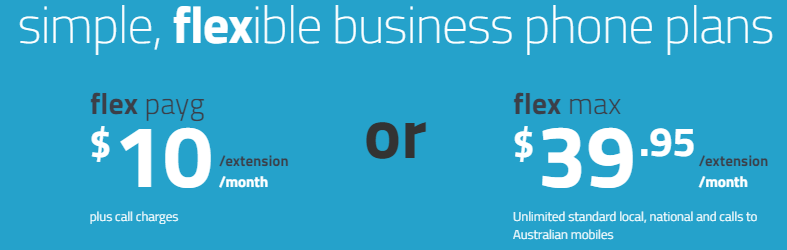
    A hosted package that I am marketing, chosen for all the good reasons is $39.95. This is for a line a handset and calls to local, national and mobile in Australia.

    NBN savings that is a deal

    Now that’s what I call a deal.

    So, answer this simple question,” why would you outlay capital when you can spread the cost over time and get a better deal”. It is, without a doubt your future.

    In conclusion, the NBN will be really good for you and Australia. Yes, it is a scaled-down product and has some early problems but the end result will provide a more efficient and cheaper network. And, by the way, it’s all we have so you have little choice.

    My prediction is that hosted systems will leave the old wall-mounted phone system gathering dust and lose all value over a short time. The uptake of hosted phone systems is gaining great traction with a myriad of suppliers. You should still how ever choose carefully.

    Peter Hanley

    NBN savings

    1800116116

    Free consultation available

  • engin nbn options

    Engin NBN options


    Engin NBN options

    Many companies in Australia are offering a hosted phone system including Engin NBN options.

    Engin is owned and operated by the M2 group, a large telecommunications carrier that joined and renamed as Vocus. They include Amcom NBN, Nextgen, dodo and several other entities. Vocus are probably the fourth biggest carrier in Australia and like all take over entities suffer from service lag when trying to amalgamate the many purchases into one group.

    Engin NBN is the low-cost provider of the group concentrating on the business area.

    Hosted phone systems

    Hosted phone systems have many providers and like any business, there are the good ones and the
    not so good ones.

    I have had contact with many of these and formulated a checklist that I would use to select a carrier.

    That checklist would include at least the following items.

    • Price. This is the first on the list but last in the criteria of selection. Why? Probably because sometimes you get what you pay for. I suggest you look for a fair price, not necessarily the cheapest.
    • Size. The second on the list but again I caution against picking on size. The marketing bucks of the big four do generate a level of interest that may not be tied to delivery. I have had as much, if not more issues with the larger entities.
    • Features. Do a plan for your business and the features you require then check that they can be supplied with your carrier of choice.
    • Bundled options. This is important hence we need to elaborate more on this.a) While Local and National calls are included in most bundles make sure than Mobile are as wellb) Calls to 1300/1800 numbers at a fixed rate. Some will charge on a timed basis.c) Your telephone number, line fee and handsets can all be included in the one bundle.

      d) You will pay less with a term contract as the carrier gets a return over the period. I believe it is also in your interest because you make a decision and forget it. You are not going into hours of debating a better plan every time someone makes an offer.

    • Customer service. This is number one on the list. Australian call centres rock, trying to speak Indian or Thai sometimes comes with a lack of understanding and creates issues.
    • Access to a dashboard application for live changes.
    • On-hold, call forwarding, conferencing are a few of the features you will also need.

      What to do now?

    • I run a business in the Telecoms area so I have a good understanding of the needs of small business. As a result, it has taken me some time to select a carrier that met the list of demands that I consider important.

    In conclusion, I do not hold criticism over any of the carriers in the market, and there are many but I do suggest that you choose wisely. As a result, my suggestion on a great pick is available at Fig-Solutions my site as a portal to a product that will meet or achieve any demand you have.

    Peter Hanley

    engin NBN options

    1800 116116

  • Cloud hosted phone systems

    Cloud hosted phone systems.

    Can you have a cloud-hosted phone system?

    The answer is a yes, definitely so and it will be normal in a few years.

    In Australia, with the NBN roll-out, all telephone calls will need to be over the internet
    as we do away with the fixed copper network. So basically you are forced into a cloud environment.

    The question should be how do you connect to the cloud for telephone calls?

    The current situation is that you share your telephone network with the internet. On your incoming line, you have a splitter that separates the two services and share a common line.
    Both have an equal opportunity at bandwidth.

    In the new NBN system, you have

    you have an internet (or data) connection and share with voice. Data has precedence over voice so over using data effects Voice.

    The good news is that you can have a lot more bandwidth and speed to compensate.

    Now you have a great understanding of this subject let’s look at Phone systems.

    Old style phone systems need an analogue adapter into a modem or router and into the system.

    Newer phone systems will need a digital card and connect using VOIP

    Others may use a SIP connection using adaptors.

    Or Use a phone system in the cloud and all you need on site is handsets.

    Don’t get to hung up on this, if the phone system is more than about 8 years old ditch it.

    The same will apply if your upgrade is too expensive to re-card the system.

    Now the choice is down to two.

    1. a current system VOIP compatible from a leading manufacturer. Purchase hardware, have it
      installed and ongoing maintenance by Tech call out.
    2. A cloud-based system. Pay a flat monthly fee that includes handsets, maintenance and most calls with all the updates done by you.

    Pretty unfair choice.

    Phone systems will be a thing of the past within a few years as the growth of hosted systems take over the market

    The NBN allows sufficient bandwidth to run both for any business up to say 5 handsets. For larger organisations, we sometimes recommend two services one for data and one for voice remembering that Data is king and can affect Voice.

    Want to know more

    Give us a call on 1800116116 or fill out below and we will call you.

    Peter Hanley

    Photo of contributor


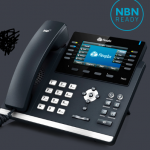
  • Is your phone system NBN ready

    IS YOUR PHONE SYSTEM NBN READY?

    by Greg Lipschitz
    on 23 May, 2017
    NBN Ready, NBN, National Broadband Network

    With the rollout of the NBN progressing at a much faster rate since the Government announced the NBN Multi-Technology Mix, the disconnection of standard telephone services such as PSTN and ISDN will now be complete by 2022.

    Is your phone system NBN ready? Many businesses are being caught out with the NBN rollout finding out after the fact that their current analogue phone system, key telephone system or traditional pabx is not NBN compatible.

    With the arrival of the NBN, your business will need to move from traditional PSTN and ISDN telephone services to IP or SIP telephone services.

    Summit has designed a number of ways to make the migration to an NBN Compatible Telephone System as painless as possible. We have an expert team who will work with you to Project Manage your move to an NBN Ready Phone System.

    Hosted Telephone System

    The easiest way to get an NBN Compatible Telephone Service is using a Hosted Phone System, Hosted PBX or Cloud PBX. With a Hosted PBX, the only equipment required in your business is an Internet Connection and the Phone Handsets on the desk. The Phone System lives in the cloud inside Summit’s Secure Datacenters. FlexPBX from Summit Internet offers you phone bill certainty with Unlimited Standard Local, National and Mobile calls for just $39.95 per user, per month.

    PSTN or ISDN Gateway

    If you want to keep your existing phone systems, such as NEC Xen, NEC Topaz, NEC SV8100, LG Aria, Nortel BCM, Commander Phone System, Siemens PABX, Avaya IP Office, LG IPECS, Samsung PABX, Mitel, Alcatel PABX, Hybrex Phone System or Panasonic PBX, then you will need a PSTN or ISDN Gateway.

    A PSTN or ISDN gateway allows you to connect your traditional phone system to the Summit IP Voice Network to be NBN ready.

    Summit Internet offers a range of PSTN and ISDN gateways for Voice over IP Telephony on the NBN and works closely with a number of Traditional Phone System Technicals to install and configure your phone system to be ready for the NBN.

    Don’t get caught out and be cut off. Speak to us now to move on to a NBN ready phone solution.

    Peter Hanley

    1800 116 116

    privacy policy

  • Is the NBN growing

    Is the NBN growing

    I am often asked is the NBN growing and the answer is yes very quickly.

    The target during the peak is a new connection every three seconds.

    Is the NBN growing

    The NBN weekly progress report is available here. This report by the NBN is quite comprehensive if you search topics.

    It was also reported during the week that in select areas they had begun turning off phone access to those that had not gone NBN.
    I believe a bit of enthusiastic reporting but none the less.

    You will be given ample warning, so heed the warning and act

    Is the NBN growing

    This will eventually happen to every area as they allow an eighteen month period of transfer starting from the available date.

    Connections are running at about 30,000 a week so they are moving on rapidly with the roll out.

    One thing I consistently push is that doing this in a rush has consequences. I have told the story how I called Telstra and they asked me to call another provider because they were too busy.

    Furthermore, not all providers are considered equal and like in real life cheap is not always good.
    One critical component is customer service and you only need read a whirlpool forum to get yourself into a knot.

    You have several critical decisions to make.
    What speed and what volume.
    How to connect your telephone access.
    What telephone call package will you employ?
    Is a hosted phone system for you?

    As in any new decision seek the help of experts.


    Peter Hanley     1800 116 116                                                                                                                                                                                home

    Is the NBN cheaper

  • Is the NBN cheaper?

    Is the NBN cheaper?

    Cheaper than what, you may well ask?

    The first thing to clear up is that the NBN co is a wholesale carrier and only selected resellers buy from them. They market to the re-sellers on a volume-based transaction.

    We the customer then buy from a re-seller or a re-seller of the re-seller for our supply.

    The top three generally known re-sellers are Telstra, Optus and possibly Vocus group a third. There are many others that come in this area, some are common names, some not so.

    The NBN is designed with a range of price points depending on download speed and the amount of data required so you get what you pay for, or should do.

    Furthermore, the NBN must carry your Voice traffic into the future. No more old copper network where we paid about $35 a month for each line we used.

    When looking at costs you should share like with like but if you are like most of us you have been hanging for extra speed and you will go up a level.

    NBN is not the only broadband medium for carrying data, you have fibre, ethernet, wireless and variants of that but as most of us will go to the NBN I will concentrate there.

    Your NBN channel can be data, voice or a combination of both depending on need. Importantly it must be remembered that Data effects voice so thereby hides a dilemma.

    To make life easy a 25 mg NBN channel should carry 3 or so voice lines and leave ample for normal trading data. It will be faster than the old ISDN2+ ( like double) and no voice degradation.

    So a majority of you can almost stop reading, but wait there is more.

    We need to consider how to pay for the Voice traffic.
    Around $16 should get you a couple of voice channels and then pay, say $0.10 a call for local and National calls and about $0.18 a minute for Calls to mobile.
    If you compare say Telstra land line costs this is about half what was available. Pay a little more for your data (at twice the speed) but save a heap on call costs, you are in front.

    Unlimited packages are also available. In fact, for $40.00 a month, you get all those calls plus the line plus a new handset if you have a look at the hosted packages.

    Is the NBN cheaper? The answer is that It can be very much so and with a better service.

    The trick is in getting good upfront advice. There are also many options away from the big spenders that will provide a better service and price.

    When do you move to the NBN?

    Is the NBN cheaper?

    As soon as possible because it takes time and eventually you have no choice.

    Don’t wait to the last minute it will complicate your change potentially damaging your business.

    Peter Hanley

    Is the NBN cheaper?

    Fig-solutions.net

    1800116116

    Is the NBN cheaper?

  • Should I wait to move to the NBN

    Should I wait to move to the NBN?

    Should I wait to move to the NBN

    The answer to this question “Should I wait to move to the NBN’ is a pretty solid NO.

    No, you say, you just want to get my business now!

    Well, let me just explain a few things to you that might assist the process.

    1. You have to move sometime, the copper network is going and not coming back.
    2. The NBN model you have may not be the best model but it is all you have.
    3. In early 2017 nearly half of all homes and businesses can access NBN
    4. This is growing at about 30.000 a day new connects.
    5. On my figures, all but the hard ones will be complete in12/18 months
    6. You have only 18 months to move from the day of connection of the NBN to your location.
    7. Moving is not overnight, it can take weeks.
    8. Planning is even longer it can take months
    9. If you don’t move you lose your telephone numbers
    10. Moving under pressure is a scene to be avoided at all costs.

    An example.

    Example; NBN was delivered to my home address recently. I rang Telstra to inquire and was told they were fully booked, please seek another provider or come back in several months.

    What to do now?

    All providers will have their hands full in peak times and if you have a preferred provider

    they may not be able to accommodate you, furthermore, this may happen several times as the ticking clock gets louder.

    As all phones must go to the NBN because the copper is going, you have no choice but to move.

    NBN don’t move you, it is done by one of a hundred plus service providers that do the work.

    In addition, some are a lot better than others so do not limit your choice.

    Now your old phone system.

    As a result of moving to the NBN, you now need to decide on what to do with your phone system.

    Old phone systems, pre- digital systems probably should be thrown away. They can be connected but it is really clunky.

    Can your digital system be upgraded with an interface card to use VOIP or SIP connections to the network?

    What call plans can you have, pay per call or a package.? All packages are not created equal so chose carefully.

    Is it better to go to a hosted system, little capital outlay and fully inclusive account?


    In conclusion on should I wait to move to the NBN


    In conclusion, you should be able to see the amount of planning that is required and the time it will take to achieve all this without Network delays.

    Let me help you with this.

    Peter Hanley

    Should I wait to move to the NBN

    fig-solutions

    1800 116 116

    Should I wait to move to the NBN?

  • TIO complaints on NBN

    TIO complaints on NBN are reportedly growing at a great rate so should you be scared to venture over to the Dark side?

    TIO COMPLAINTS ON NBN

    In a recent report, it was stated that;

    “The TIO received almost 66,000 complaints from Australian consumers and businesses unable to resolve problems with service providers between July and December 2016, up from just 49,000 complaints during the same period in 2015.( link)

    Now that’s a lot of complaints or issues that have not been resolved to the satisfaction of the customer.
    It should be remembered that the growth of the NBN far outstripped the rate of increase of the complaints so the real figures are distorted. The headline should perhaps be “Complains Go down on NBN”

    TIO complaints on the NBN down.TIO complaints on NBN down arrow

    It matters not, 66.000 is still a lot of complaints but let’s look further.

    Of all the complaints 86.7% were from residential customers and only 13% from business entities.

    So mums and dads were kicking up a storm because their life had changed, holy moly we are in trouble.

    Let’s look at the type of complaints and what took the top spot?

    I am absolutely blown away with the top two results, although perhaps having had to deal in this area maybe I should have guessed the answer being so obvious and I am so annoyed that our industry can put up with this.

    What did we complain about?

    CUSTOMER SERVICE was the number one complaint, can you believe it, the easiest thing to get right and we blew it by a long way.

    How much of this can be attributed to overseas call centres and difficulties on understanding problems?

    TIO complaints on NBN

    Billing was the next issue, how hard can it be, yes you can make mistakes or errors but they are fixed well before you need to make a complaint to the TIO.
    Next came Faults and complaint handling which should be fixed early. Yes, there will be faults, that is nothing new but how the industry handle them is another thing.

    So Customer service and fault handling were a majority percentage of the problem, maybe we need some communications lessons to bring this down.

    What did the authorities have to say?

    NBN chief customer officer John Simon said: “the percentage of NBN customers complaining about services had dropped compared to the first half of last year, but there was still room to improve.”

    Even the industry ombudsman said:

    ” Ms Jones said the number of households connected to the NBN had also doubled in that time and complaints were no longer growing at the same rate.”

    “The complaints about (NBN) services are not keeping pace with the rate of connections, so that’s a good sign,” she said.

    So that’s the good news, they are getting better and would need to be with over 30,000 new connections every week.

    Of the 66,000 odd complaints, we need to back out 23,000 mobile complaints leaving about 32.000 between the internet and fixed lines. A figure still too high. ( 24,000 internet and 18,000 fixed lines)

    What are the big issues?

    One of the big issues with TIO complaints on NBN is speed and not getting what you pay for because of location or other factors.
    We have lived with a speed issue for many years on the Internet so this is not new. The difference is you can now do something about it.
    With ADSL 2 as an example what you received was the best effort and I for one could never achieve over about 8 MB download of a promised 12 MB. I had no options,  now with the NBN, you can go up or down to suit your need or your price.

    The headline I believe was sensational, designed to show or alarm the consumers about the new system, one that we have to live with.

    I believe another contributing factor is that consumers are led to the TIO far too early in the conversation. If you have a problem you are urged to ring the ombudsman and let them sort it out when some meaningful dialogue with your carrier can fix the issue.

    In conclusion, we must remember we are all going to the NBN so get over it. It may not be the best system, in fact, a watered-down version of the original plan at that but it is all we have got.

    TIO complaints on NBN

    For those that are interested, I did provide an extensive report available at www.fig-solutions.net

    TIO complaints on NBN

    Peter Hanley

    Fig-solutions.net

    1800 116  116                  TIO complaints on NBN

    all figures extracted from TIO here