Wealthy Affiliate vs. Perplexity AI: Which Reigns Supreme for Niche Research in 2026? The answer and the reasons will surprise you
The landscape of online business and content creation is constantly evolving, and because search engines like Google are getting smarter, the need for deep, accurate niche research has never been more critical. Gone are the days of simply stuffing keywords; today, it’s all about understanding audience intent and delivering high-quality, authoritative content.
Date: 17/02/2026
Subject: Finding Keywords that work
Author: Peter Hanley, coachhanley.com

Consequently, many aspiring and established affiliate marketers are looking for tools to streamline this crucial first step. But when it comes to niche research, two platforms often come up in discussion: Wealthy Affiliate and Perplexity AI. Therefore, let’s dive deep into a direct comparison to see which one genuinely stands out for crafting a winning content strategy in 2026.
Understanding the Contenders: A Quick Overview
First, consider Wealthy Affiliate (WA). While primarily known as an all-in-one affiliate marketing training platform, WA includes a powerful keyword research tool called Jaaxy, which also provides niche ideas and competitive analysis. Its strength lies in its integrated approach, combining education with practical tools.
On the other hand, we have Perplexity AI. This isn’t just another chatbot; it’s an AI-powered conversational search engine. In essence, Perplexity aims to provide direct answers with cited sources, making it incredibly effective for rapid information gathering and understanding complex topics.
Feature Showdown: Niche Research Capabilities
Wealthy Affiliate (via Jaaxy): The Integrated Educator
Wealthy Affiliate’s approach to niche research is part of its broader educational framework. Specifically, Jaaxy helps users:
- Discover Keywords: You input broad ideas, and then Jaaxy provides a wealth of related keywords, including average monthly searches, estimated traffic, and QSR (Quoted Search Results), which indicates competition.
- Brainstorm Niches: It has a “Niche Finder” feature that furthermore helps spark ideas based on popular trends and evergreen topics.
- Analyze Competition: The QSR metric is particularly useful because it shows you exactly how many websites are targeting that exact phrase.
- Site Rankings: Moreover, you can track your own site’s rankings for specific keywords directly within the platform.
However, Jaaxy’s strength is in its structured, data-driven approach to finding keywords within a niche. For example, if you already have a niche in mind, like “sustainable urban gardening,” Jaaxy will help you find the best phrases to target. Its output is very numerical, thus requiring some interpretation.
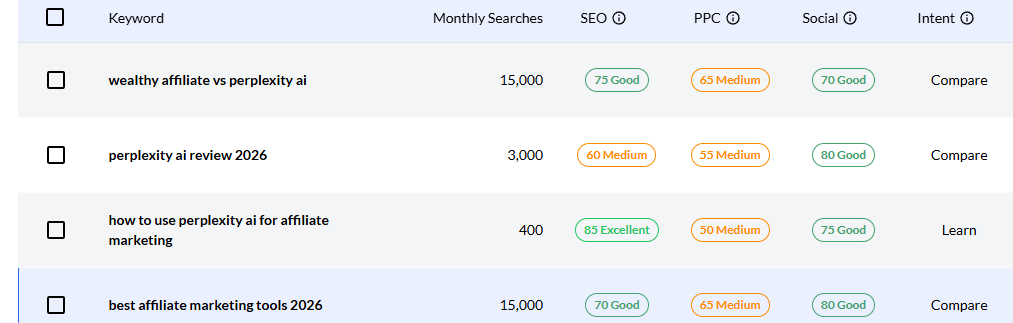
This snap shot is taken from Jaaxy searching the keyword
Perplexity AI: The Conversational Investigator
Perplexity AI offers a fundamentally different, yet equally powerful, way to approach niche research. Instead of just numbers, it provides context and answers:
- Contextual Understanding: You can ask Perplexity broad questions like, “What are the emerging trends in sustainable pet food?” And in turn, it will synthesize information from various online sources, summarizing key trends and concepts.
- Cited Sources: Crucially, every piece of information Perplexity provides comes with direct links to its original source. This is invaluable because it allows you to dive deeper, verify facts, and understand the authority behind the information.
- Topic Exploration: It’s excellent for exploring uncharted territories. For instance, if you’re looking for a niche, you could ask, “What are some underserved micro-niches in home decor?” and get well-articulated answers rather than just keyword lists.
- Follow-Up Questions: Its conversational nature means you can refine your queries, thereby digging deeper into specific aspects of a niche as new ideas arise.
Consequently, Perplexity excels at understanding the essence of a niche, the problems people are trying to solve, and the sub-topics that are gaining traction.
The Verdict: Which One for Which Stage?
Ultimately, the “winner” isn’t clear-cut; it depends on your specific needs and where you are in your research process.
- Choose Wealthy Affiliate (Jaaxy) if:
- You are a beginner looking for an all-in-one training solution.
- You prefer a structured, step-by-step approach to keyword and niche discovery.
- You want clear, numerical data on keyword competition and search volume.
- Therefore, it’s ideal for moving from a broad idea to a concrete content plan with specific keywords.
- Choose Perplexity AI if:
- You need to quickly grasp the core concepts, trends, and problems within a potential niche.
- You value rich, contextual information with verifiable sources over raw keyword data.
- You want to explore new, complex, or interdisciplinary niches where traditional keyword tools might struggle to provide initial insights.
- In short, it’s perfect for initial exploration, brainstorming, and a deep dive understanding of a niche’s current landscape.
A Synergistic Approach for Maximum Impact
In conclusion, the most effective strategy for niche research in 2026 might not be choosing one over the other, but rather integrating both.
- Start with Perplexity AI: Use it for initial brainstorming. Ask it broad questions about emerging trends, underserved audiences, or pain points in various industries. This will help you uncover potential micro-niches and understand their underlying context.
- Move to Wealthy Affiliate (Jaaxy): Once you have a few promising niche ideas from Perplexity, port those ideas into Jaaxy. Then, use its keyword tools to drill down into specific, low-competition keywords within that niche. Moreover, you can leverage WA’s training to understand how to build content around those keywords.
By combining Perplexity’s intelligent, contextual research with Wealthy Affiliate’s data-driven keyword analysis, you can build an incredibly robust foundation for your affiliate marketing business. Indeed, this dual-tool approach ensures you’re not just finding keywords, but truly understanding the human intent behind them.

You may also read: Marketing better, not harder