The Lie: More words equal better content. The Truth: Content must be Scannable, Trustworthy, and Purpose-Built to solve the user’s problem better than the competitor.
You survived the Keyword Authority hurdle (Part 1). You’re getting impressions, maybe even a few clicks. But those users immediately bounce, leaving your conversion rate stuck at 0.1%. Why?
Because you fell into the TFC Trap: Thin, Feature-Centric Content.
The TFC Trap: Where Momentum Dies
Most beginner affiliate content (and the content from the 80% who give up) is nothing more than a rewritten brochure. It describes what the product is (its features) instead of what the product does (the user’s transformation).
When a high-intent user lands on your page, they are asking two questions:
Do you understand my unique, urgent problem? (Trust)
Can you get me to the solution faster? (Scannability/Click)
If your content fails to nail both, they click back to Google. This is the Content Crisis—when your hard-earned traffic hits a dead end.
Failure Point 2: Static, Unscannable Walls of Text
In the high-stakes environment of transactional searches, users are not reading; they are scanning for confidence signals.
The 80% Mistake: Using long, dense paragraphs, burying the conclusion, and failing to use visual aids like tables or boxes. They make the content hard to consume.
The Architect’s Fix:Aggressive Scannability. Implement:
Comparison Tables: High-contrast, immediately visible, answering the “which one is best” question instantly.
In-Content CTAs: Strategic, benefit-driven callouts placed immediately after the core problem is acknowledged.
Short Sentences/Short Paragraphs: Guaranteeing fast consumption, especially on mobile devices.
You must accept that high-intent users are impatient. Your content’s job is to respect their time and guide them immediately to the solution (the click).
The Content Mandate: Transformation, Not Description
Your content is the bridge of trust. If that bridge is rickety (thin) and confusing (unscannable), no one crosses.
Failure Action (The 80%)
Success Action (The Architect)
Listing features of Product A and Product B.
Describing the transformation (e.g., “Stop wasting 30 minutes chopping, and start drinking your smoothie in 5.”)
Burying the link in the last paragraph of the review.
Using 3-4 diverse, benefit-driven CTAs strategically placed at points of peak reading intent.
Writing from a desk without unique opinions or experiences.
Injecting Unique Value—actual hands-on data, custom pros/cons, and personal conviction.
The Fix: Creating Conversion-Focused Content
Your content must be designed to generate the click. It must prioritize user experience and confidence above all else.
Reverse Engineer the SERP: Find the page ranking #1 and identify its weakest point. Then, create content that fixes that weakness (e.g., their comparison table is messy; yours is clean and interactive).
Focus on the First 30 Seconds: Can a mobile user, scanning your page for 30 seconds, confidently identify the best product and the best next step? If not, optimize for speed and scannability.
The Content Crisis is a crisis of value. The 80% fail because their content provides minimal value, forcing the user to return to Google for a better answer. You must be the final answer.
The Authority Illusion – Why You Quit Before You Even Started
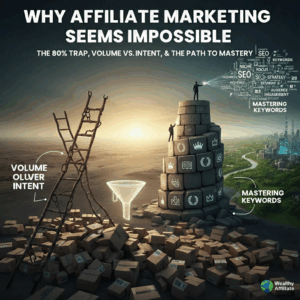
The Lie: Affiliate marketing is a race to the highest-volume keyword. The Truth: Affiliate marketing is a slow, methodical buildup of Keyword Authority in hyper-specific niches.
If you’re in the 80% that quit, your failure likely started here, on Day One. You chased the Authority Illusion, trying to rank for a massive, broad keyword (like “best coffee grinder”) on a brand new site. When results didn’t materialize after 90 days, you concluded the system was broken, not your strategy.
The problem isn’t that you didn’t get clicks; the problem is that you never earned the right to compete for them.
The Foundation Failure: Chasing Volume Over Intent
Every successful affiliate site operates on a principle of Cumulative Authority. You don’t start at the top; you start at the absolute bottom of a vertical, proving your worth to Google by perfectly solving user problems for small, easy-to-rank-for searches.
Failure Point 1: The “Low-Hanging Fruit” Trap
You might use a keyword tool and filter for a decent-volume term with a seemingly low difficulty score (KD). But if your site is brand new, that “low” score is still a wall.
The 80% Mistake: Targeting a keyword like “best blender for green smoothies” (1,000 searches/month) immediately.
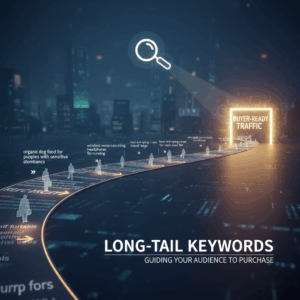
The Architect’s Fix: Targeting Long-Tail Keywords that show extreme purchase intent and low competition, like “Vitamix 5200 vs Ascent 2500 for ice crushing”. This term might only get 50 searches a month, but it targets a user who is literally milliseconds from making a $500 purchase.
By perfecting 20 articles that rank first for 50-search-per-month keywords, you build 1,000 highly profitable clicks. More importantly, you build Domain Authority that allows you to eventually attack the bigger terms.
The Keyword Authority Mandate
Your goal in the first 6 months is not to generate revenue; it is to generate Keyword Authority. You must demonstrate to Google that you are the most valuable resource for a tightly focused cluster of buyer questions.
Failure Action (The 80%)
Success Action (The Architect)
Broadly targeting“best travel insurance”.
Targeting“travel insurance for digital nomad in Thailand with annual renewal”.
Writing 10 articles that all vaguely cover the main topic.
Writing 50 articles that cover every possible sub-topic and user question within a narrow niche.
Giving up after 3 months with 0 rankings.
Securing 50 small, intent-driven rankings, providing the necessary foundation and initial revenue to keep going.
The Fix: Mastering Intent-Driven Keywords
Stop thinking like a blogger and start thinking like a Buyer’s Guide. Your keyword research must be based purely on User Intent.
Transactional Intent: Focus 80% of your initial content on terms where the user is ready to spend money (best, vs, review, deal, coupon, alternative).
Long-Tail Depth: Drill down to keywords with 50-100 searches per month. They are easy to rank for, build trust quickly, and often convert at 10x the rate of a broad term.
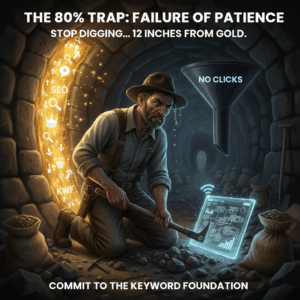
The failure of the 80% is the failure of patience. They stop digging for gold 12 inches from the vein. You must commit to building the Keyword Foundation before you can expect the clicks.
ful affiliate site operates on a principle of Cumulative Authority. You don’t start at the top; you start at the absolute bottom of a vertical, proving your worth to Google by perfectly solving user problems for small, easy-to-rank-for searches.
Failure Point 1: The “Low-Hanging Fruit” Trap
You might use a keyword tool and filter for a decent-volume term with a seemingly low difficulty score (KD). But if your site is brand new, that “low” score is still a wall.
The 80% Mistake: Targeting a keyword like “best blender for green smoothies” (1,000 searches/month) immediately.
The Architect’s Fix: Targeting Long-Tail Keywords that show extreme purchase intent and low competition, like “Vitamix 5200 vs Ascent 2500 for ice crushing”. This term might only get 50 searches a month, but it targets a user who is literally milliseconds from making a $500 purchase.
By perfecting 20 articles that rank first for 50-search-per-month keywords, you build 1,000 highly profitable clicks. More importantly, you build Domain Authority that allows you to eventually attack the bigger terms.
The Keyword Authority Mandate
Your goal in the first 6 months is not to generate revenue; it is to generate Keyword Authority. You must demonstrate to Google that you are the most valuable resource for a tightly focused cluster of buyer questions.
Failure Action (The 80%)
Success Action (The Architect)
Broadly targeting“best travel insurance”.
Targeting“travel insurance for digital nomad in Thailand with annual renewal”.
Writing 10 articles that all vaguely cover the main topic.
Writing 50 articles that cover every possible sub-topic and user question within a narrow niche.
Giving up after 3 months with 0 rankings.
Securing 50 small, intent-driven rankings, providing the necessary foundation and initial revenue to keep going.
The Fix: Mastering Intent-Driven Keywords
Stop thinking like a blogger and start thinking like a Buyer’s Guide. Your keyword research must be based purely on User Intent.
Transactional Intent: Focus 80% of your initial content on terms where the user is ready to spend money (best, vs, review, deal, coupon, alternative).
Long-Tail Depth: Drill down to keywords with 50-100 searches per month. They are easy to rank for, build trust quickly, and often convert at 10x the rate of a broad term.
The failure of the 80% is the failure of patience. They stop digging for gold 12 inches from the vein. You must commit to building the Keyword Foundation before you can expect the clicks.
What Is the Perfect Long-Tail Keyword? Your Blueprint for Unstoppable Traffic. We hear about longtail words and here we tell you exactly what to look for
Are you tired of fighting tooth and nail for traffic using highly competitive, one or two-word phrases? Welcome to the secret world of SEO success, where the real winners are not those who shout the loudest, but those who speak the most clearly. The key to unlocking consistent, high-converting organic traffic lies in finding the perfect long-tail keyword.
This isn’t just about finding a long phrase; it’s about pinpointing the exact intersection of user need, low competition, and strong commercial intent. Get ready to transform your SEO strategy from guesswork into a precise, targeted blueprint for unstoppable growth.
Decoding the Anatomy of the “Perfect” Long-Tail Keyword
Before we search for this digital gold, we must first define it. A long-tail keyword is typically a phrase of three or more words, but the perfect one has a specific, powerful anatomy.
The Myth vs. The Reality
Many people think a long-tail keyword is simply a low-volume keyword. However, the perfect long-tail keyword is characterized by three non-negotiable elements that ensure your effort translates into profit:
High Specificity (Intent): The keyword reveals the user’s intent with crystal clarity. It shows they are far along in the customer journey and are looking for a very specific answer or solution.
Low Competition (Achievability): The number of authoritative, competing pages is minimal, making it highly achievable for your site to rank on the first page of search results.
Sufficient Traffic (Value): While it won’t have the volume of a short-tail keyword, it receives enough targeted searches each month to justify the time spent creating quality content.
Consequently, finding this combination means you are targeting users who are ready to act, bypassing the highly saturated competition, and ensuring a positive return on your content investment.
The Foundation: Pinpointing Clear Search Intent
The single most important characteristic of the perfect long-tail keyword is its ability to reveal unambiguous user intent. If you can read the keyword and know exactly what the user wants to see, you’ve found a winner.
Identifying the Four Pillars of Intent
First and foremost, every search query falls into one of four categories. Targeting your long-tail keyword based on these categories ensures you always provide the right content at the right time.
Transactional Long-Tail: The user is ready to buy or commit. (e.g., “cheapest monthly plan for online bookkeeping software“).
Commercial Investigation Long-Tail: The user is researching before a purchase. (e.g., “Wealthy Affiliate vs. SEMrush keyword tool comparison“).
Informational Long-Tail: The user is seeking knowledge or a guide. (e.g., “how to choose keywords for a brand new affiliate website“).
Navigational Long-Tail: The user is looking for a specific site or page. (e.g., “Wealthy Affiliate keyword tool login page“).
Therefore, when you are looking for that perfect long-tail phrase, aim for the transactional and commercial investigation types if your goal is immediate sales, or the highly specific informational type to build authority and trust. I wrote a lot more on emotional marketing here
The Search: Data-Driven Methods for Discovery
Finding this perfect balance requires moving beyond simple brainstorming and utilizing data science to validate your assumptions.
Leveraging the “Keyword Golden Ratio” (KGR)
The Keyword Golden Ratio is a powerful, yet simple, formula for filtering long-tail keywords to find the lowest competition gems. It is particularly effective for newer websites.
To be considered a “perfect” candidate based on this ratio, the following conditions must be met:
Search Volume (SV): The keyword must have a low-to-medium volume, ideally under 250 monthly searches.
KGR Value: The resulting ratio must be $\le$ 0.25.
In practice, if a keyword has an SV of 200, and only 25 pages have it in their exact title (the allintitle result), the KGR is $25 \div 200 = 0.125$. Since $0.125 \le 0.25$, this is a prime target! This technique acts as a powerful filter, helping you bypass the noise and focus only on highly winnable opportunities.
Competitor “Near-Miss” Analysis
Another powerful data-driven strategy is observing your top competitors to find their “near-miss” keywords—phrases they rank for in positions 11 through 30.
Why is this valuable?
It proves the keyword has commercial and traffic value (since the competitor is spending time on it).
It proves the competition is not unbeatable, as they haven’t yet locked down a top-10 position.
Consequently, you can create a piece of content that is objectively better—more detailed, more recent, and better optimized—and swoop into the top 10 positions with significantly less effort than targeting a position 1 keyword. Furthermore, this process reveals gaps that are verified by market demand.
The Validation: Metrics that Prove Perfection
Once you have identified a strong candidate using the KGR or competitor analysis, the final step is a manual, human-centric validation to confirm its perfection.
The “SERP Look” Test
Manually search your long-tail keyword and examine the first page of search results (the SERP). What you see here will confirm or deny the keyword’s perfection:
Positive Signs (Go for it!): You see results from forums (Reddit, Quora), small blogs, low-authority websites, or pages that don’t directly answer the query. This indicates a weak competitive landscape and a high likelihood of a quick win.
Negative Signs (Proceed with caution): You see results dominated by massive authority sites (Forbes, Wikipedia, Amazon) or government/academic institutions. Even if the KGR looks good, these giants are difficult to beat.
Ultimately, the perfect long-tail keyword has a SERP that shows weak, un-optimized content, signaling that the search engines are waiting for a comprehensive, high-quality answer—the exact content you are about to create!
Remember, traffic without purpose is vanity. The perfect long-tail keyword must align with your monetization strategy. Ask yourself:
When a user lands on my page after searching this phrase, what is the next logical step I want them to take?
If the long-tail keyword satisfies both the user’s need and moves them forward toward a desired action (like clicking an affiliate link, signing up for a lead magnet, or viewing a product), then you have truly found the perfect phrase.
The journey to explosive traffic is paved not with massive, unreachable keywords, but with dozens, or even hundreds, of perfectly targeted long-tail keywords. By applying the principles of clear intent, data-driven analysis using tools and KGR, and manual SERP validation, you stop competing with the giants and start serving the exact audience that needs your solution. Start building your blueprint for unstoppable traffic today!
I searched the traffic analyser ( Jaaxy) at Wealthy Affiliate to estimate traffic and competition before startinbg out. i also used it to create an image and off course my signature logo. I also used Google Gemini for research and assisting with content
This question isn’t theoretical; it’s being lived, right now, by millions of people who have amassed a lifetime of knowledge, skill, and sheer grit. I recently received a message from a reader, himself eighty years young, whose situation distills the core dilemma of modern longevity:
“At 80 myself, I see many friends succumbing to diseases like Alzheimer’s, while others of a similar age thrive and continue to contribute to society. I recently made a decision to rid myself of some responsibilities because I fear I might get old, and I was being pressured by my wife to slow down. This decision did not sit well with me because it felt like giving up.”
What an honest, painful observation. To feel capable, yet to be advised—or pressured—to retreat, purely because of a number. This isn’t about reaching retirement age; it’s about the emotional toll of the expectation of decline.
The False Measure: Age as a Number, Not a State of Being
When we ask, “How do you know when you are too old?” we often default to a chronological answer. But the vibrant 80-year-old running a consulting business and the 65-year-old struggling to learn a new skill are in two entirely different states of being.
Being “too old” is rarely a fixed date. It is a moment of felt resignation.
Your observation about your friends is key: some are succumbing, while others are thriving. The difference is often found in the realms of mental engagement, physical movement, and, most importantly, purpose.
The Three Signals That Don’t Lie
The signals that truly indicate it’s time to slow down, pivot, or retire completely have nothing to do with your birth year. They are rooted in three vital pillars of human function:
1. Loss of Competence (The Mastery Signal)
For those who have excelled throughout their careers, the most difficult signal is the measurable, unavoidable slide in competence. This isn’t about disinterest; it’s about the inability to perform a core task to your own high standards.
The Honest Audit: Can you still execute the required task without endangering yourself or others? Are you missing details you used to catch instantly? If your core professional identity relies on sharp, immediate judgment (like a surgeon, a pilot, or a complex financial advisor), the answer to this audit is non-negotiable.
The Pivot: If the answer is “no,” you don’t have to quit; you can pivot from doing to guiding. Transition from the hands-on operator to the trusted mentor, board member, or advisor. This preserves your expertise while removing high-stakes execution risk.
2. Chronic Lack of Joy (The Emotional Signal)
The biggest fuel for continued contribution is the genuine, deep satisfaction—the flow—that comes from using your skills.
When the work you once loved consistently feels like a relentless, joyless drag—when it starts to create more stress, irritability, and anxiety than fulfillment—that is your mind and body raising a serious red flag.
The Difference Between Tiredness and Burnout: Being tired at the end of a good day is healthy. Being chronically anxious at the start of the day is a signal of burnout.
The Pressure vs. Purpose Paradox: You mention giving up responsibility due to spousal pressure, and the decision didn’t sit well. That misalignment between external pressure and internal purpose is precisely why it felt like “giving up.” The work you choose should energize you, not require constant emotional recovery.
3. The Dimming of Curiosity (The Cognitive Signal)
The greatest indicator of mental vitality is an active curiosity—the desire to learn, adapt, and solve new problems. The moment you stop asking “Why?” or “How can I do this better?” is the moment you risk the mental stagnation that precedes true decline.
Thriving seniors are often those who embrace technology, learn a new language, or dive into complex hobbies. They keep the neural pathways active by constantly engaging with novelty.
The Courage of the Pivot, Not the Surrender of the Retreat
Your dilemma is an epidemic among high-achieving, active elders: the fear of giving up vs. the necessity of scaling back.
The crucial distinction is this: You are not giving up contribution; you are redefining its container.
If your wife is pressuring you to slow down, she is likely motivated by love and the desire to protect your health and your shared time. You can honor her concern without sacrificing your identity.
Surrender looks like passive withdrawal, sitting on the sidelines, and watching the world move on.
Pivot looks like active selection, choosing only the responsibilities that fire your passion and jettisoning the ones that feel like maintenance or obligation.
Perhaps you don’t need to quit being a leader; you just need to stop being a manager. You can transition from running the whole organization to mentoring its most promising young talent. You exchange the volume of work for the density of influence.
The question isn’t “When am I too old?” The question is: “What is the most effective, joyful, and sustainable way for me to use the wisdom I have earned, right now?”
Your continued activity is proof that your internal engine is still running strong. Do not let external expectations define your vitality. Define your purpose, then choose only the work that defends and supports that purpose.
Questions for Discussion:
In your experience, what is the single biggest internal signal that tells a person they need to scale back or pivot their responsibilities?
How do you respond to pressure from loved ones to “slow down” without causing friction, yet still protecting your right to contribute?
What is one thing you have learned in your life that you feel is too valuable not to share with the next generation?
We want to hear your story.
Share your thoughts and experiences in the comments below: How have you successfully pivoted your role or contribution as you’ve aged?
I am still actively engaged with Wealthy Affiliate where I am jioned with many similar age people all still chasing a purpose in life
Every marketer wants to write words that make people stop scrolling, lean in, and click “buy.” Yet, if you’ve ever tried, you know it’s not just about being clever—it’s about being human. Behind every conversion lies emotion: the invisible force that drives decisions, commitment, and loyalty.
Today’s digital world runs on algorithms, but those algorithms measure something deeply human—emotion. So let’s explore how to use emotional triggers for conversion copy that not only performs but also connects at a human level.
Understanding the Power of Emotional Triggers
Before we dive into tactics, it helps to step back and understand what emotional triggers are.
An emotional trigger is a psychological cue that sparks a feeling strong enough to cause a reaction. Think of curiosity that makes you click a headline, or belonging that draws you closer to a community. These small sparks create momentum.
Consumers rarely buy products—they buy the feeling of confidence, safety, or joy that the product represents. That’s why mastering emotional copywriting isn’t manipulation; it’s empathy in motion.
Transitioning to practical use, the question becomes: how can we identify and apply these triggers in real-world copy?
The Psychology Behind Conversion Copywriting
Great copywriters act as digital psychologists. They understand mental shortcuts and emotional patterns that influence decisions.
At its core, emotional copywriting taps into three mental dynamics:
Curiosity and anticipation: Humans crave closure. When you introduce an intriguing question or open loop, readers stay engaged until the payoff arrives.
Fear of loss: Psychologically, people are twice as motivated to avoid losing something as they are to gain it. That’s why limited-time offers and scarcity signals work so consistently.
Identity validation: When your copy mirrors who your audience already believes they are—or who they aspire to be—it earns instant trust.
Every persuasive headline you’ve ever clicked on likely used at least one of these. The goal isn’t to trick the mind but to align your message with how people naturally think and feel.
Emotional Triggers That Move People to Click and Convert
Once you understand the psychology, the next step is knowing which emotional triggers drive action. Here are some of the most effective and ethical ones used by high-performing marketers.
1. Curiosity: The Story Gap
Curiosity keeps people scrolling. When your copy hints at a solution or benefit but doesn’t give it all away upfront, readers feel an emotional itch to know more.
Instead of saying “Learn how to improve your sales,” frame it as “Discover the overlooked emotional switch that boosts conversions effortlessly.” The difference is small—but curiosity transforms passive readers into active seekers.
2. Fear of Missing Out (FOMO)
Fear of loss is powerful, but so is the fear of being left behind. When people believe others are thriving without them, they feel compelled to act.
This doesn’t mean using fake scarcity or countdown gimmicks. It’s about showing what’s genuinely at stake—time, opportunity, relevance—if they don’t take action.
3. Belonging and Connection
Humans are social creatures. We want to be part of stories, movements, and identities larger than ourselves. If your copy conveys inclusion—language like “join thousands of…” or “be part of the movement”—it activates the belonging trigger.
People may buy for logic, but they stay for community.
4. Mastery and Transformation
One of the deepest triggers in conversion copy is the promise of transformation. When your message paints a picture of life after success—stronger, freer, more confident—it speaks directly to the reader’s future identity.
This emotional framing works across categories, from health to finance to education, because people crave progress.
Applying Emotional Triggers Across the Funnel
To make the most of these triggers, you need to apply them strategically along the buyer’s journey.
Awareness Stage: Ignite Curiosity
At this stage, your goal is to capture attention. Use curiosity-driven headlines, questions, or insight gaps that make readers pause. For example:
“What if everything you knew about persuasion was wrong?”
This kind of phrasing taps into the reader’s need to resolve uncertainty—a psychological driver of engagement.
Consideration Stage: Build Trust and Relatability
Once you have attention, deepen the relationship with empathy and understanding. Speak to the pain points behind their problem. Use language that acknowledges feelings before you introduce solutions.
For example, “If you’ve ever felt frustrated watching others convert while your campaign stalls, you’re not alone.” This tone makes readers feel seen and understood—foundational to trust.
Decision Stage: Reinforce Identity and Resolve Doubt
When readers reach this stage, emotional reinforcement matters more than logic. Remind them who they’ll become after taking action: calm, capable, confident. Then, ease any hesitation through reassurance. Testimonials or social proof can validate their choice emotionally and cognitively.
The Bridge Between Emotion and SEO
You might wonder, how does all this tie into modern search optimization? Surprisingly well. Search engines have evolved to read emotional nuance through intent and semantics.
BERT and RankBrain algorithms interpret not just what users type, but what they feel while searching. Someone typing “how to use emotional triggers for conversion copy” isn’t just asking for a definition—they want to feel empowered, skilled, and inspired.
By embedding emotional phrasing and contextual entities throughout your content, you satisfy both the human reader and the search algorithm. Sentiment-rich keywords such as “emotionally persuasive copy,” “psychological triggers,” and “human-centered marketing” reinforce topical authority while sounding natural.
Crafting Emotionally Resonant SEO Copy
Let’s blend emotion with precision. Here are some actionable ways to optimize your conversion copy for both hearts and algorithms:
Start with emotional intent: Before you write, ask, “What feeling do I want my audience to leave with?” Then build tone and structure around that.
Optimize for semantic variety: Instead of repeating the same keywords, weave in emotional synonyms—“resonate,” “connect,” “inspire,” “motivate.” Search algorithms reward semantic diversity.
Use emotional calls to action (CTAs): Replace generic CTAs like “Buy now” with emotion-based ones like “Start your transformation today” or “Join a community that converts with confidence.”
Embed micro-stories: Share brief, relatable examples that humanize the message and increase dwell time. Stories signal depth and authenticity, two metrics tracked in engagement-based ranking.
These emotional and structural techniques combine to increase time on page, improve click-through rates, and strengthen your content’s perceived expertise—modern SEO’s holy trinity.
Case Study: Emotional Resonance That Converts
Imagine an entrepreneur selling a productivity course. At first, her ad headline read, “Boost your productivity in 10 days.” The response was lukewarm.
After applying emotional triggers, she reframed it to “Reclaim your focus and feel unstoppable again.” That single language shift replaced logic with emotion—and conversions rose by 43 percent.
Why? Because people don’t buy productivity. They buy the feeling of control and confidence. Once emotions align with outcomes, behavior follows naturally.
How Emotional Copy Builds Long-Term Loyalty
Effective emotional copy doesn’t just convert once—it compounds over time. When your words consistently evoke positive emotion, readers begin to associate your brand with that feeling.
This forms an emotional memory loop. Each time they encounter your content, their brain retrieves the earlier positive emotion, reinforcing trust and brand affinity. In a noisy online world, emotional resonance is retention gold.
Loyalty, after all, is not just repeat business—it’s emotional security.
Bridging Data and Emotion
It’s easy to perceive data and emotion as opposites, but the best marketers know they’re partners. Analytics show what’s working; emotion explains why it works.
Use data to measure engagement and conversion rates—but interpret those numbers through a human lens. Behind every click is a person seeking meaning, identity, and connection.
Emotion turns data into insight. When your analytics reveal a pattern, ask not only “What are users doing?” but “What are they feeling?” This mindset shift separates tactical marketers from timeless ones.
Key Takeaways: Turning Emotion Into Action
Emotional triggers are the foundation of conversion psychology.
Curiosity, fear of loss, belonging, and transformation drive action at different funnel stages.
Empathy and identity validation transform content from persuasive to personal.
Integrating emotional intent into SEO amplifies visibility and engagement.
Long-term loyalty stems from sustained emotional consistency.
When you combine emotional intelligence with algorithmic awareness, your words stop selling and start connecting—creating conversions that feel meaningful rather than manipulative.
Final Thoughts
Emotion is the ultimate marketing differentiator. Algorithms will always evolve, but emotion remains our most ancient metric.
Learning how to use emotional triggers for conversion copy isn’t about exploiting feelings—it’s about honoring them. When readers feel recognized, safe, and inspired, conversions become a natural outcome of trust.
So, the next time you write, don’t just ask, “What will make people click?” Ask, “What will make them feel?”
Because in the end, emotion isn’t the secret to conversion—it’s the story behind it.
You’ve been pouring your heart into your blog for months, crafting thoughtful articles and hitting publish regularly. Yet somehow, your reader count stays flat, your comments section remains empty, and your social shares barely register. If this sounds like your story, you’re not alone. Most bloggers face the frustrating reality that simply writing good content isn’t enough to build genuine engagement.
The problem is clear: without active reader engagement, your blog becomes just another voice shouting into the void. But here’s the good news—engagement isn’t some mysterious force reserved for established publications. Rather, it’s a skill you can master with the right strategies.
Know Your Audience Inside and Out
To begin with, engagement starts long before someone lands on your page. First and foremost, you need to understand exactly who you’re writing for. Take time to research your target audience’s pain points, questions, and aspirations. Moreover, consider their reading level, preferred topics, and where they spend their time online.
Once you’ve identified your ideal reader, create detailed audience personas. Subsequently, use these personas to guide every piece of content you create. This targeted approach ensures your articles speak directly to the people most likely to engage with your work.
Craft Irresistible Headlines and Introductions
Your headline is the first—and sometimes only—opportunity to capture attention. Importantly, it must promise value, spark curiosity, or address a specific problem. Rather than generic titles, try testing headlines that ask questions or offer surprising insights.
In addition to strong headlines, your introduction plays a crucial role. Specifically, you should hook readers within the first two sentences by highlighting the pain point your article solves. This way, readers immediately understand why they should keep reading.
Write in a Conversational, Scannable Format
Here’s something many bloggers overlook: people don’t read blogs the way they read books. Instead, they scan, skim, and jump between sections. Therefore, break your content into short paragraphs, use descriptive subheadings, and employ white space generously.
Furthermore, incorporate bullet points and numbered lists to highlight key takeaways. Equally important is using a conversational tone that feels like a friend giving advice, not a textbook explaining concepts. This approach naturally encourages readers to stay longer and absorb more information.
Encourage Interaction Throughout Your Content
Engagement requires a two-way conversation. To this end, ask questions throughout your article and invite readers to share their own experiences. For instance, you might say, “What’s your biggest challenge with this topic?” at the end of sections.
Additionally, create opportunities for readers to take action beyond simply reading. Include polls, quizzes, or downloadable resources that provide immediate value. As a result, readers feel invested in your content and are more likely to return.
Optimize Your Call-to-Action Strategy
A strategic call-to-action (CTA) is essential for converting casual readers into engaged community members. Rather than burying your CTA at the very end, consider placing a soft CTA midway through your article. Subsequently, end with a more prominent CTA that clearly tells readers what to do next.
The key is matching your CTA to your content. For example, if you’re writing about productivity hacks, your CTA might invite readers to download a free template or join your email newsletter. Likewise, your CTA should feel like a natural next step, not an interruption.
Build Community Through Responsive Comments
Comments are where blog engagement truly flourishes. To nurture this, make a commitment to respond to every comment within 24 hours. Not only does this show readers you value their input, but it also encourages others to participate.
Moreover, ask follow-up questions in your responses to deepen conversations. By doing so, you transform your comment section into a thriving community discussion rather than a one-way broadcast.
Promote Consistency and Authenticity
Finally, remember that engagement builds over time. Consistently publishing high-quality content at regular intervals trains your audience to expect and look forward to your posts. At the same time, don’t sacrifice authenticity for perfection. Your unique voice and perspective are what set you apart.
The Path Forward
Building genuine blog engagement requires intentional effort, but the rewards are undeniable. Ultimately, when you focus on serving your audience’s needs and fostering genuine interaction, engagement naturally follows.
Ready to take your blog to the next level? The journey toward sustainable blogging success involves continuous learning and optimization. That’s where Wealthy Affiliate comes in. With comprehensive training, powerful tools, and a supportive community of fellow bloggers, Wealthy Affiliate equips you with everything needed to build a thriving blog that actually engages and converts.
The affiliate marketing world often paints a picture of quick, passive income: “Slap up a few links and watch the money roll in!” If only it were that easy. The reality for many is hours of content creation, a trickle of traffic, and conversion rates that feel insultingly low. You start with passion, but the lack of consistent results can lead to a crushing sense of failure. It feels like you’re missing the secret formula.
But here’s the good news: the “secret” isn’t a complex algorithm or a magic button. It’s a combination of focus, trust, and efficiency. With the power of today’s tools, you can skip the burnout phase and build a business that is both profitable and genuinely helpful to your audience.
The Cornerstone: Choose Your Niche, Build Your Authority 🧱
To begin your journey, you must plant your flag in one spot.
The biggest mistake a new affiliate can make is trying to promote everything to everyone. It dilutes your message and makes establishing authority virtually impossible. Therefore, your first critical step is niching down.
Look for the Overlap: Find the intersection between your expertise/passion and a target audience’s burning problem. Instead of “AI for everyone,” think “AI tools for freelance graphic designers” or “Best VPNs for remote digital nomads.”
Establish Authority: When you focus, you can create truly detailed, high-value content—think honest reviews, step-by-step tutorials, and compelling case studies. People buy from people they trust, and trust is built on authentic expertise. Consequently, genuine reviews based on your first-hand experience are non-negotiable.
The Accelerator: AI Tools and the Power of Efficiency 🚀
The new wave of AI isn’t just a content factory; it’s an efficiency accelerator. It allows you to do the work of a team while operating solo.
Content Drafting: Use Large Language Models (LLMs) to conquer writer’s block.( ChatGPT, ClaudeAI or Gemini.io) They can quickly generate outlines, draft first versions of product comparisons, and help optimize content for relevant keywords. This frees up your time to focus on what only you can provide: your personal insights and detailed product testing.
SEO Intelligence: AI-powered tools are masters at analyzing data. They can uncover overlooked, low-competition keywords (long-tail keywords) that you can rank for quickly. Furthermore, they help you analyze your top-performing content so you can create more of what truly converts your audience.
Visual Appeal: Platforms like Canva, with their AI features, make it incredibly simple to create professional-looking images, social media graphics, and video snippets. Ultimately, good visuals are essential for breaking through the noise.
The Golden Rule: Value First, Sales Second 🤝
Always remember: the conversion is a byproduct of the value you provide.
A common stumbling block is prioritizing the affiliate link over the reader’s needs. Successful affiliates flip this script entirely. Consequently, every piece of content must solve a problem for your audience, first and foremost.
Educate, Don’t Just Sell: Use your blog posts to compare products, explain complex features, and detail real-life use cases. Show your audience exactly how a product will make their lives better or easier.
Disclose Everything: Transparency is key to long-term success. Always clearly disclose that you earn a commission if they purchase through your link. This small act of honesty builds massive, long-term audience trust. People understand you need to make money, but they appreciate being treated with respect.
Focus on Recurring Commissions: Look for affiliate programs that offer monthly recurring commissions (common with SaaS, hosting, or membership platforms). Promoting a $49/month software with a 30% recurring commission means one referral could earn you a steady $15 every month. This strategy is how you build a stable, scalable income stream.
Your Next Steps: Building Momentum 📈
Affiliate success is not a sprint; it’s a marathon built on consistent action. To turn your affiliate dream into a reality, here’s your blueprint:
Define Your Niche: Be specific.
Choose Your Platforms: Start with a simple blog (like one powered by WordPress) and a social channel where your audience hangs out.
Find the Right Partners: Join affiliate networks (like ShareASale or CJ Affiliate) and seek out direct programs for products you already use and love.
Create Consistently: Use AI to draft your content, but use your personal experience to polish it.
Start small, focus on helping people, and let the tools of the modern age accelerate your journey. Your affiliate dream isn’t just possible—it’s waiting for your authentic voice to lead the way.
All this is but a click away, Wealthy Affiliate has the training and support along with a generous recurring income. Thy also provide a Niche tool that helps define your market and a keyword tool to support your progress
In the digital age, a single truth has governed our online lives for decades: when you have a question, you “Google it.” That simple act—typing a keyword into a blank bar—has been the primary portal to the world’s information, making the search giant virtually synonymous with knowledge retrieval.
Yet, for all its power, the traditional search engine carries a familiar and frustrating pain point. We are constantly forced to be our own digital librarians. As we wade through ten blue links, filter out ads, click on multiple pages, and stitch together information from different sources just to get a definitive answer. We don’t want to search anymore; we want to know.
But what if the internet’s most powerful companies—Google, Apple, and others—have finally built the single entity that eliminates this friction? What if they are converging on a single, definitive answer engine that is not just a tool, but a true assistant?
Welcome to the era of “World Knowledge Answers.”
This is not just a catchy phrase; it represents the ultimate ambition of the massive AI programs now set to dominate the information market: Google’s Gemini and the heavily revamped version of Apple’s Siri, which is being internally transformed by a system known as World Knowledge Answers (WKA). This powerful, multimodal partnership, which may even see Apple leveraging Google’s advanced Gemini models for summarization, is poised to create a formidable, answer-first platform that changes everything we know about finding information.
Beyond the Blue Links: The Shift to Definitive Answers
Fundamentally, the game has changed.
Traditional search worked on a model of providing links to content. Its core job was to match your query with the most relevant web pages. The new generation of AI-powered assistants, including Gemini’s AI Overviews and the forthcoming WKA integration with Siri and Safari, is fundamentally different: they are built to provide a single, synthesized, authoritative answer.
Imagine asking your phone, “What’s the best route for a two-week road trip through the Australian outback that avoids extreme heat, and can you draft an email to my spouse with the suggested itinerary?” A few years ago, that was ten separate searches and an hour of planning.
However, with World Knowledge Answers at its core, the new assistant can perform three critical functions:
Multimodal Understanding: It can process complex natural language (your voice request) and even visual input (like a photo of your car’s fuel range).
Information Synthesis: It quickly aggregates data from a vast internal knowledge graph, real-time web results, local data (like weather forecasts), and your personal data (your calendar, location).
Actionable Output: It doesn’t just give you a summary; it generates a complete, sourced travel plan and drafts the email, complete with transition words like “Also” and “In conclusion,” directly into your inbox.
This transition from information retrieval to knowledge completion is what makes this development so transformative. It turns your device into a true partner capable of complex reasoning and multi-step task execution.
Gemini and Siri: The Unstoppable Alliance
In fact, the competitive landscape is more collaborative than you might think.
While Google and Apple have historically been rivals, the sheer scale of the AI arms race is forcing strategic alliances. Google’s Gemini, a powerhouse Large Language Model (LLM) already driving Google’s AI Overviews, represents the cutting edge in reasoning and information processing. Apple, meanwhile, commands a massive ecosystem of over a billion active devices, but its native assistant, Siri, has long lagged behind.
Consequently, the integration of WKA with Gemini’s intelligence is a game-changer. Apple is focusing on a seamless, privacy-first user experience that integrates WKA into Siri, Safari, and even Spotlight search on your Mac. In this arrangement, Apple provides the platform and the privacy guarantees, while Gemini may provide the underlying raw intelligence for complex summarization and planning. This powerful collaboration—marrying Google’s intelligence with Apple’s unparalleled user base and ecosystem integration—is what makes this emerging “World Knowledge Answers” platform such a serious threat to the old search model.
What This Means for You and Your Business
Therefore, adapting to this new reality is non-negotiable.
For most of us, this new era is simply better: instant, accurate, and actionable answers. But for businesses, marketers, and content creators, the rules of visibility are changing overnight. The old strategy was Search Engine Optimization (SEO), focused on ranking a webpage on the first page. The new mandate is Answer Engine Optimization (AEO), focused on making your content the source the AI assistant cites in its definitive answer.
Consider these critical shifts:
From Clicks to Citations: Getting your link clicked might no longer be the primary goal. The new success metric is having your brand’s content featured and cited within the AI’s comprehensive answer summary.
From Keywords to Intent: AI models are experts at understanding the intent behind conversational, multi-part questions. Content must be clearly structured to answer the definitive question in a concise, authoritative way, going beyond simple keyword stuffing.
The Rise of Multimodal Content: Because WKA and Gemini’s AI Overviews provide text, images, and videos in their answers, your content strategy must embrace rich media. Clear images, instructive videos, and well-structured data are far more likely to be pulled into the AI summary than plain text alone.
In Conclusion: Embracing the Future of Knowing
The convergence of AI giants like Google (with Gemini) and Apple (with its World Knowledge Answers/Siri overhaul) signals the end of the search engine as we knew it. No longer will we tolerate being forced to dig for information. Ultimately, the future belongs to the platform that can deliver the fastest, most authoritative, and most actionable knowledge.
This new digital assistant—the combination of these powerful AI minds—is set to become the central, indispensable layer of our digital lives, managing our tasks, answering our most complex questions, and transforming the digital economy. The time to stop searching and start knowing is now, and understanding the power behind World Knowledge Answers is the first, essential step.
You’re posting, promoting, and pushing your affiliate links… but nothing happens. No clicks. No sales. Just silence.
Sound familiar?
It’s one of the biggest frustrations in affiliate marketing — working hard yet seeing little in return. The problem isn’t your effort or even your product. The real issue is trust.
People online are bombarded with offers. Everyone wants to sell them something. But very few take the time to help them first.
That’s where the magic happens. The moment you flip your mindset from “selling” to “serving,” your results change — fast.
The Currency of the Digital Age: Value
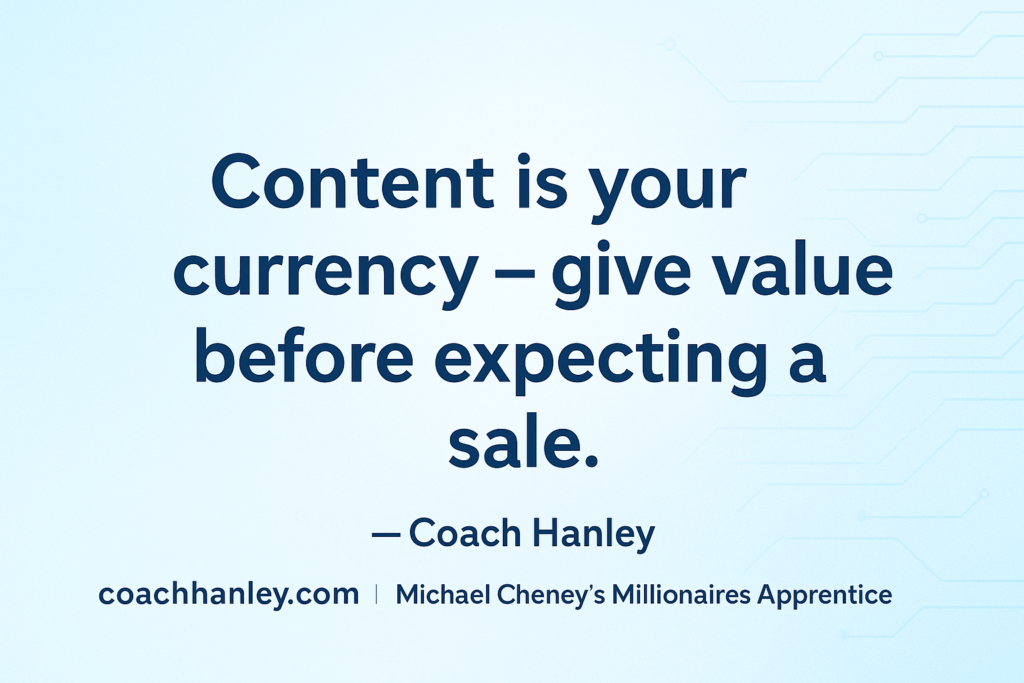
Forget dollars for a moment. In today’s online world, content is your currency.
Every blog post, video, or email you create is a deposit into your audience’s trust account. The more value you give, the more credibility you earn. And once that account is full — people want to buy from you.
Think of it this way: would you hand your credit card to a stranger who just yelled, “Buy this now!”? Of course not. But if someone has educated you, entertained you, and helped solve your problems — that’s different. You already trust them.
That’s the foundation of modern affiliate marketing.
The Old Way vs. The Smart Way
Let’s be honest. The “old way” of doing affiliate marketing was pretty simple:
Grab a link.
Post it everywhere.
Hope for the best.
That used to work when fewer people were online and competition was light. But now? Everyone’s an influencer, and audiences can smell insincerity a mile away.
The smart affiliates of 2025 know that success doesn’t come from links — it comes from leadership. You build trust first, and sales follow naturally.
What Giving Value Really Means
“Give value” gets thrown around a lot, but what does it really mean?
It means: ✅ Teach something useful. Show people how to solve a small problem. ✅ Share your experience. Tell stories of what worked and what didn’t. ✅ Be generous. Offer free tools, insights, or checklists. ✅ Be consistent. Keep showing up, even when you’re not making a sale.
When you create content that helps others win, they see you as an expert — not a salesperson. That’s when affiliate marketing gets fun again.
The Power of Storytelling
People remember stories, not sales pitches.
If you’re a senior like me, you’ve lived a lot of life — and your stories are gold. Whether it’s how you discovered affiliate marketing, how AI tools changed your workflow, or how you overcame failure, sharing your story connects you with others on a human level.
And when people relate to you, they’ll trust your recommendations. That’s how you move from being “just another marketer” to being someone your audience looks forward to hearing from.
Using AI to Create More Value
Here’s the good news — creating value no longer takes hours or days. With AI tools, you can research, write, design, and post faster than ever before.
Want to create a blog post, a social caption, or even a video script? AI can give you a first draft in minutes. Then you add your human touch — your tone, your story, your insight.
This is exactly what Michael Cheney’s Millionaires Apprentice teaches: how to use AI and automation the right way — not to spam content, but to scale your genuine value.
Because when you multiply valuable content, you multiply trust — and trust leads to commissions.
Give Before You Get
One of the simplest but most powerful lessons I ever learned is this: 👉 “Give first. Get later.”
It applies to relationships, business, and especially affiliate marketing.
When you give people something useful — a blog that answers a question, a tip that saves them time, or a resource that helps them earn — you create reciprocity. It’s human nature to return the favor.
That’s why value-driven content builds long-term profits. You’re not chasing one quick sale. You’re building a loyal audience who buys from you again and again.
Building Trust Step by Step
Let’s break this down into simple, actionable steps:
Pick your audience. Know who you’re helping — beginners, seniors, side hustlers, etc.
Identify their pain. What frustrates them? What are they searching for?
Be authentic. Don’t fake expertise — share your real journey.
Offer solutions. When the time is right, introduce products that genuinely help.
That’s it. It’s not magic — it’s method.
When Value Turns Into Sales
Here’s the beautiful part: when you lead with value, you don’t have to ask for the sale — your audience asks you how to buy.
That’s what happens when people trust you. They’ve learned from you, they respect your insights, and they’re curious about what tools you use.
That’s when your affiliate links start working on autopilot — because your content did the heavy lifting.
The Millionaire Mindset
Michael Cheney often says, “If you want to make money online, stop chasing sales and start creating impact.”
That’s exactly the mindset you need today. Affiliate marketing in 2025 is about leadership, learning, and leveraging systems that make your message go further.
The Millionaires Apprentice program gives you all of that — AI training, high-ticket commissions, and a clear roadmap to build your audience around trust and value.
Conclusion: Stop Selling, Start Serving
If you take one thing away from this post, let it be this: Content is your currency. The more value you share, the richer your results will be.
Don’t focus on what you can get today — focus on what you can give. The sales will follow naturally.
So stop spinning your wheels. Learn how to create real value that pays you back again and again.
Ever feel like you’re drowning in data but still not really understanding your customers? You’re not alone.
Businesses today have access to mountains of numbers — website visits, social likes, email opens, and purchase trends — yet many still struggle to make sense of what customers actually want. The truth is, traditional marketing tools can’t keep up with the speed of change in consumer behavior.
That’s where AI-driven customer insights step in to change everything in 2025.
Artificial Intelligence doesn’t just collect data — it interprets it, finding patterns that humans can’t see. It transforms confusion into clarity, helping you predict customer needs before they even know them themselves. And for affiliate marketers, entrepreneurs, and small businesses alike, that’s pure gold.
What Are AI-Driven Customer Insights?
In simple terms, AI-driven customer insights are smart systems that use machine learning and predictive analytics to understand your audience better.
Instead of you guessing which products will sell or what blog title will attract readers, AI looks at millions of data points — demographics, buying history, browsing habits, and even social media behavior — to make accurate predictions.
Think of it as your marketing crystal ball for 2025.
Here’s what it can do:
Segment your audience into precise groups based on real interests, not assumptions.
Predict future trends, allowing you to market ahead of competitors.
Personalize experiences so every customer feels like you’re talking directly to them.
Optimize campaigns automatically by learning what works and what doesn’t.
That’s the magic of AI — it keeps learning and improving while you focus on what matters most: creating value.
Why 2025 Is the Year of AI Customer Intelligence
2025 marks a turning point. AI tools are no longer just for big corporations with deep pockets. Now, even small businesses and affiliate marketers can access advanced analytics through cloud platforms and easy-to-use software.
This year, we’re seeing:
Real-time insights replacing outdated reports.
Chatbots becoming true digital assistants that remember user preferences.
Voice and sentiment analysis revealing customer emotions behind words.
Predictive lead scoring showing who’s ready to buy right now.
AI is no longer about automation — it’s about anticipation.
And when you can anticipate what your audience wants, you become the leader in your space.
From Guesswork to Precision
In the past, marketers relied on instinct and experience. You’d test ads, hope for clicks, and adjust slowly over time.
Now, AI can do that testing for you — instantly.
For example: If you run a blog promoting affiliate products, AI tools can analyze which posts drive the most conversions, how long readers stay on each page, and even which topics they’ll likely respond to next week.
Instead of guessing, you’re making decisions based on data-backed precision.
That means:
No more wasted ad spend.
No more content that misses the mark.
And no more frustration trying to “figure out” what works.
Here’s a truth most marketers forget: data doesn’t create loyalty — connection does.
But AI helps you build that connection by understanding customers on a deeper level.
Using natural language processing, AI tools can detect customer sentiment in comments or reviews. They can alert you when someone’s unhappy so you can step in and solve the problem quickly.
They can even recommend personalized offers or products, just like Amazon does — except now, even small businesses can do it too.
It’s personalization at scale. It’s marketing that feels human.
And that’s exactly what customers want in 2025 — not just fast answers, but meaningful interaction.
Transitioning to Smarter Marketing
So how do you actually use AI-driven customer insights in your affiliate or online business?
Let’s break it down:
Start with analytics. Use tools like Google Analytics 4 or AI dashboards to track behavior patterns.
Integrate AI chatbots. They collect real-time data while improving customer experience.
Leverage content AI. Use writing assistants (like ChatGPT!) to create blogs or emails based on trending topics your audience already loves.
Personalize your outreach. Let AI segment your email list by interest or engagement level.
Experiment and adjust. AI isn’t magic — it’s a learning tool. The more data you feed it, the smarter it gets.
By using AI this way, you’re not just marketing — you’re learning every day. You’ll know what your customers care about, what drives them to act, and how to earn their trust.
The Affiliate Angle: Why This Matters More Than Ever
Affiliate marketing thrives on connection and trust.
People buy from those they believe understand their needs. So if your message hits the wrong tone, or your offer doesn’t match the customer’s stage of interest, you lose them.
AI-driven insights remove that risk. They help you:
Identify which products resonate with your audience.
Understand what content converts best.
Predict when your audience is most likely to buy.
Imagine promoting a course or product at the exact moment your readers are ready — that’s not luck, that’s AI in action.
For affiliates working with platforms like Wealthy Affiliate, this is an incredible edge. Wealthy Affiliate already gives you powerful training, keyword tools, and hosting — add AI insights, and your results can skyrocket.
You’ll write better blogs, create smarter ads, and attract the right people instead of shouting into the void.
A Glimpse into the Future
By 2025, we’re moving toward predictive personalization — where AI doesn’t just react, it prepares.
You’ll see:
Websites that adjust in real time based on visitor behavior.
Emails written dynamically for each reader.
AI systems that plan marketing campaigns weeks ahead of trends.
It’s an exciting time — and the best part is, you don’t have to be a tech genius to use it. With platforms like Wealthy Affiliate guiding your online strategy, you can combine proven affiliate training with the power of AI tools.
You’ll go from chasing customers to understanding them — and from guessing profits to growing them.
The Big Picture
AI-driven customer insights aren’t about replacing humans. They’re about giving marketers — especially small business owners and affiliates — the power of data that used to belong only to big corporations.
They help you see your customers clearly, act faster, and build trust in ways that were impossible just a few years ago.
In 2025, those who adopt AI-driven insights will lead their niches. Those who don’t… will keep guessing.
Conclusion: Stop Guessing. Start Growing.
Understanding your audience has always been the secret to success — but now, AI gives you the tools to do it with confidence and precision.
Whether you’re just starting in affiliate marketing or building an established business, embracing AI insights is the smartest step you can take this year.
So stop guessing and start growing — with the right guidance, training, and tools.